COULD YOU HELP ME WITH SOMETHING?
This project began as an exploration into how communities are formed. I started my research by focusing on the idea of building third spaces. However, through conversations with people, I realized that beyond space, there is a strong need for deeper and more meaningful connections.
The direction was informed in part by Deirdre Sullivan's essay "Always Go to the Funeral," which reflects on how relationships are built through small acts of inconvenience and presence.
DAE PRE-MASTERS PROGRAMME
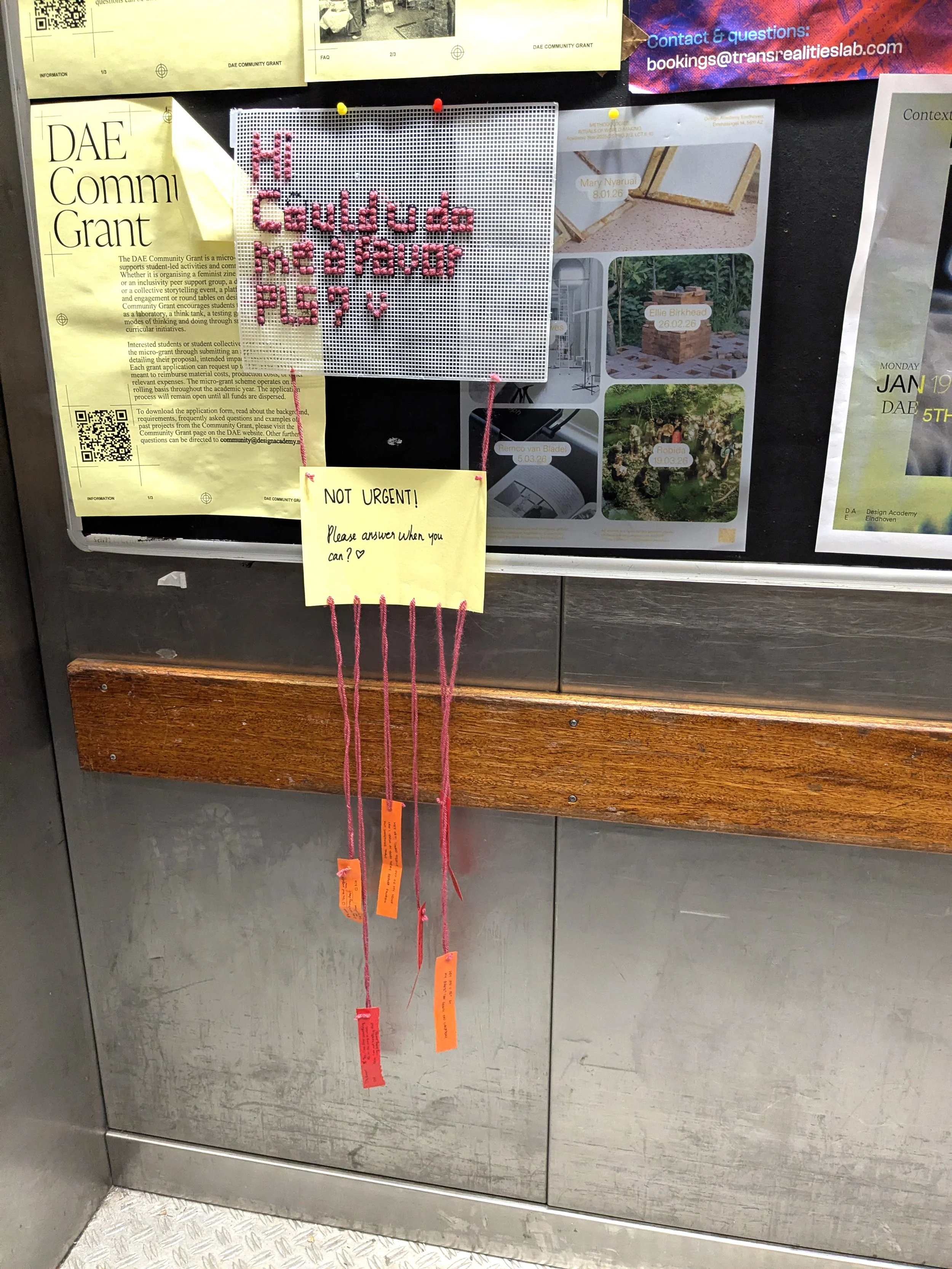
Observation
Having recently moved to a new country, I became more aware of the need for these acts. Relationships play a significant role in creating a sense of belonging, but forming deeper connections requires vulnerability, the willingness to open up without knowing how the other person will respond.
Asking for help is one situation where this vulnerability naturally occurs. I have developed this in response to that moment of hesitation and overthinking which takes over when we have to ask someone. It feels like an invasion of the other persons time and effort.
By positioning the request as something that also allows the other person to participate, the responsibility is shared, where the act of asking also becomes an act of offering.
The methodology
The outcome is a guide that helps structure the act of asking for help, offering prompts and methods that make the process more approachable. It is designed for people who struggle to articulate need, providing a way to express vulnerability while still maintaining a sense of control.
This guide does not aim to solve that completely, but instead to acknowledge the difficulty and suggest that asking is, at the very least, an available option, whose benefits reach far beyond situational.
The methodology is divided into three steps:
1. Identifying the barrier
2. Visualizing the need
3. Structuring the ask.
The Tool (Zine)
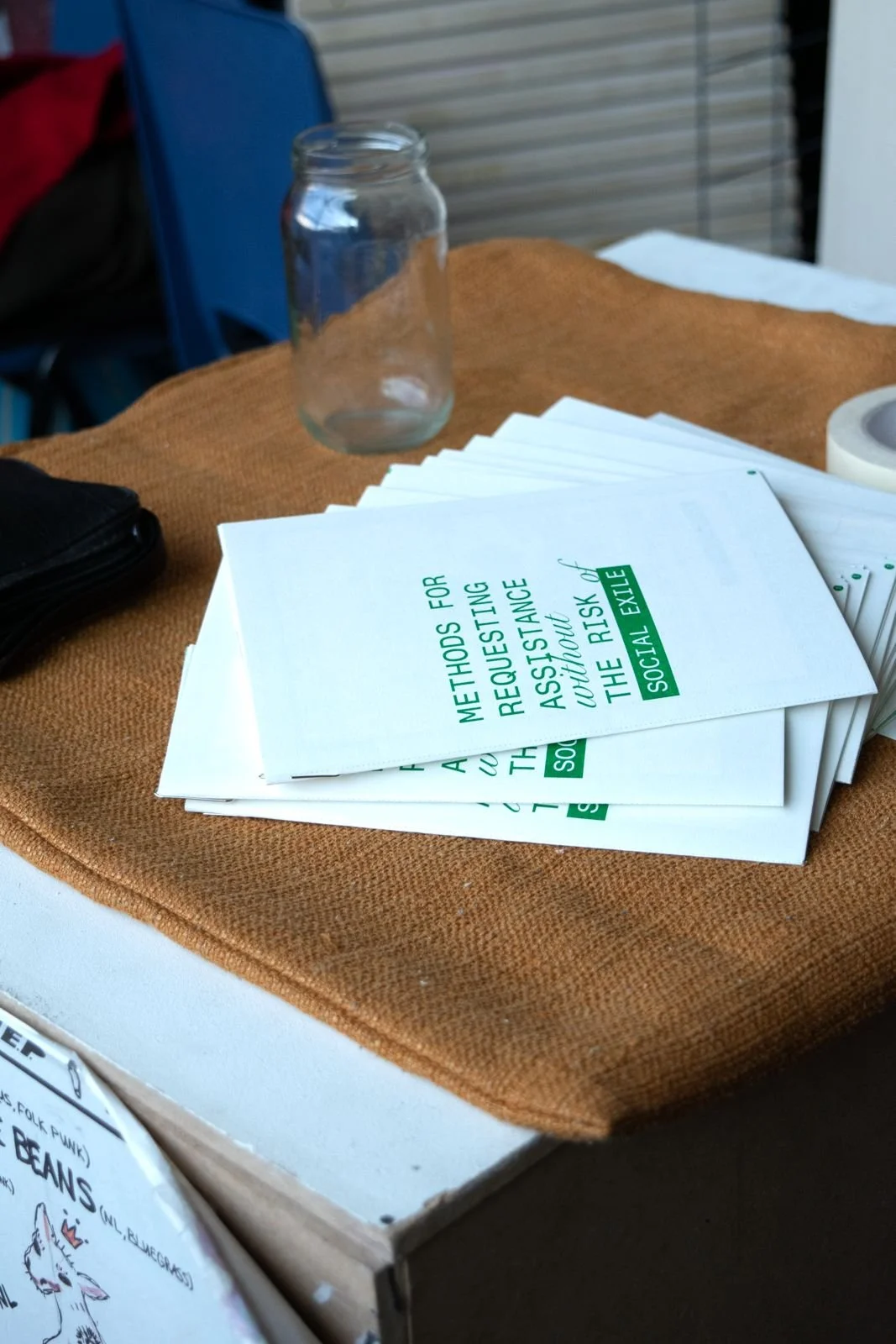
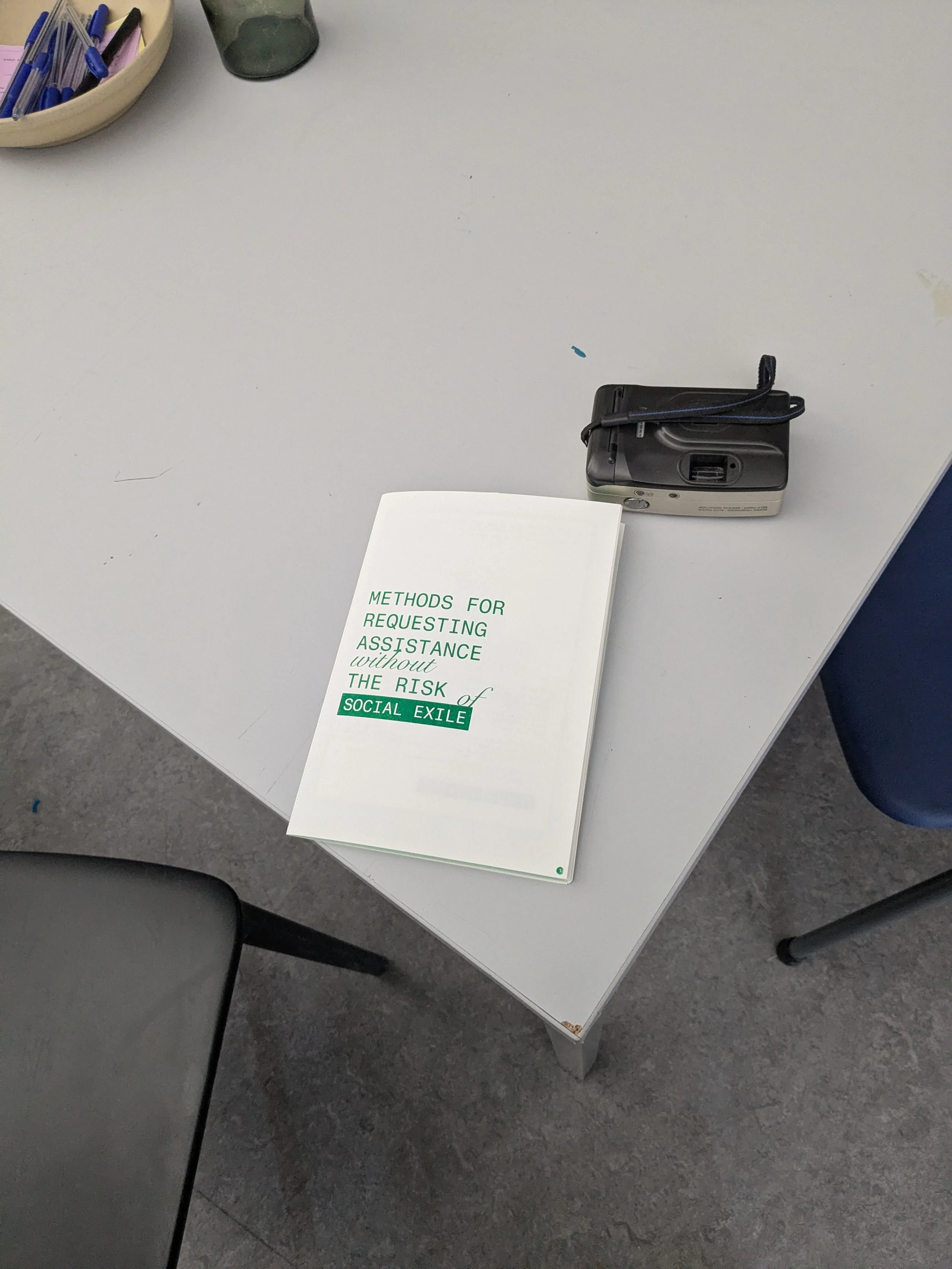
The methodology is compiled into a zine that functions as both a guide and a workbook. It is designed to be simple to follow, easy to reproduce, and accessible to a wide audience.
The monochrome format ensures it can be printed in most settings, while the structure allows users to actively engage with the process. The zine concludes by encouraging circulation, prompting users to share it, and in doing so, extend the act of asking and supporting within their own networks.
1. Identifying the barrier
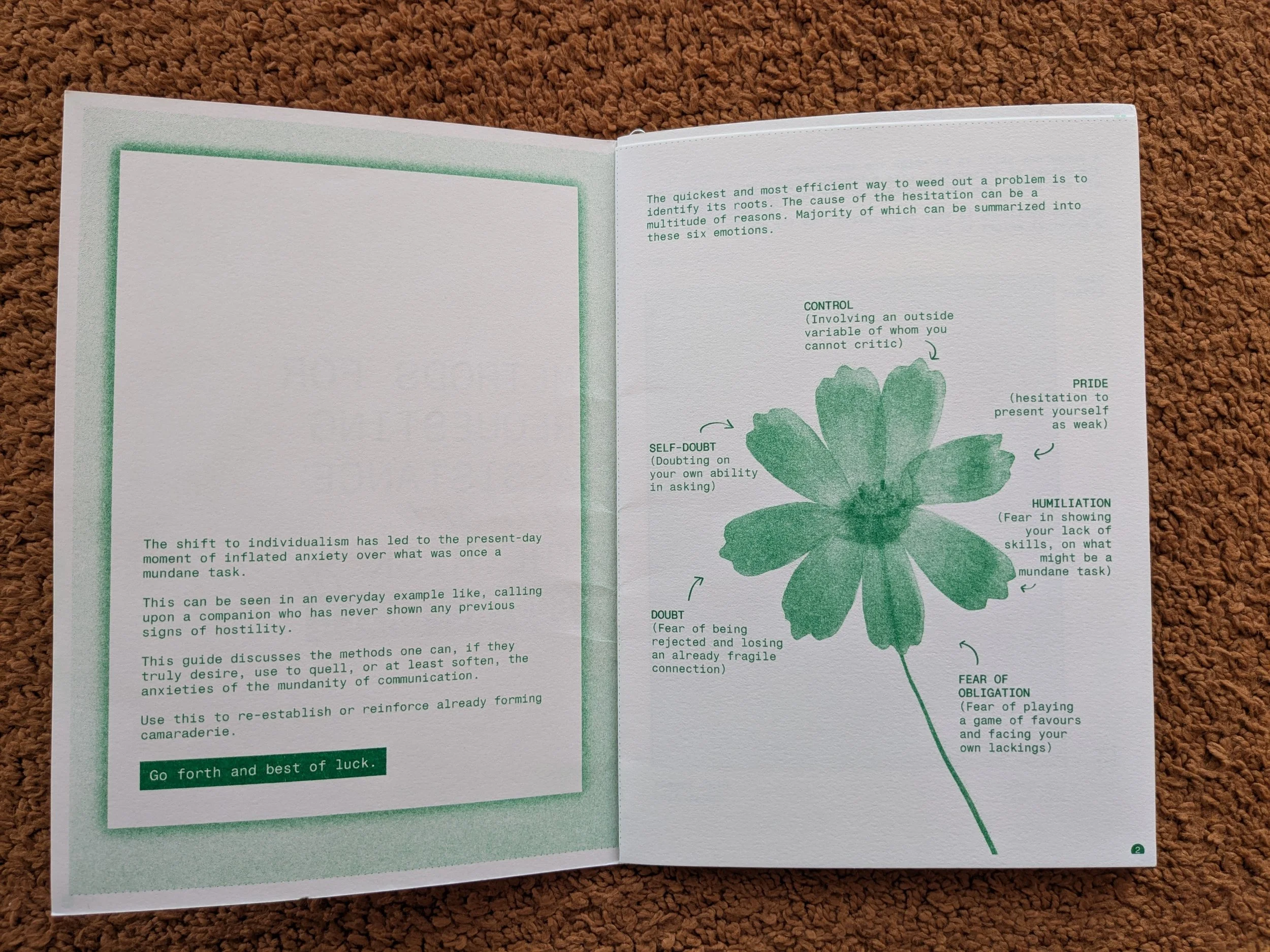
Since help is often sought from people within existing relationships, the hesitation is largely internal. The first step is therefore to identify and name the emotion preventing the ask. This is distilled into six recurring emotional barriers: pride, doubt, self-doubt, humiliation, control, and fear of obligation.
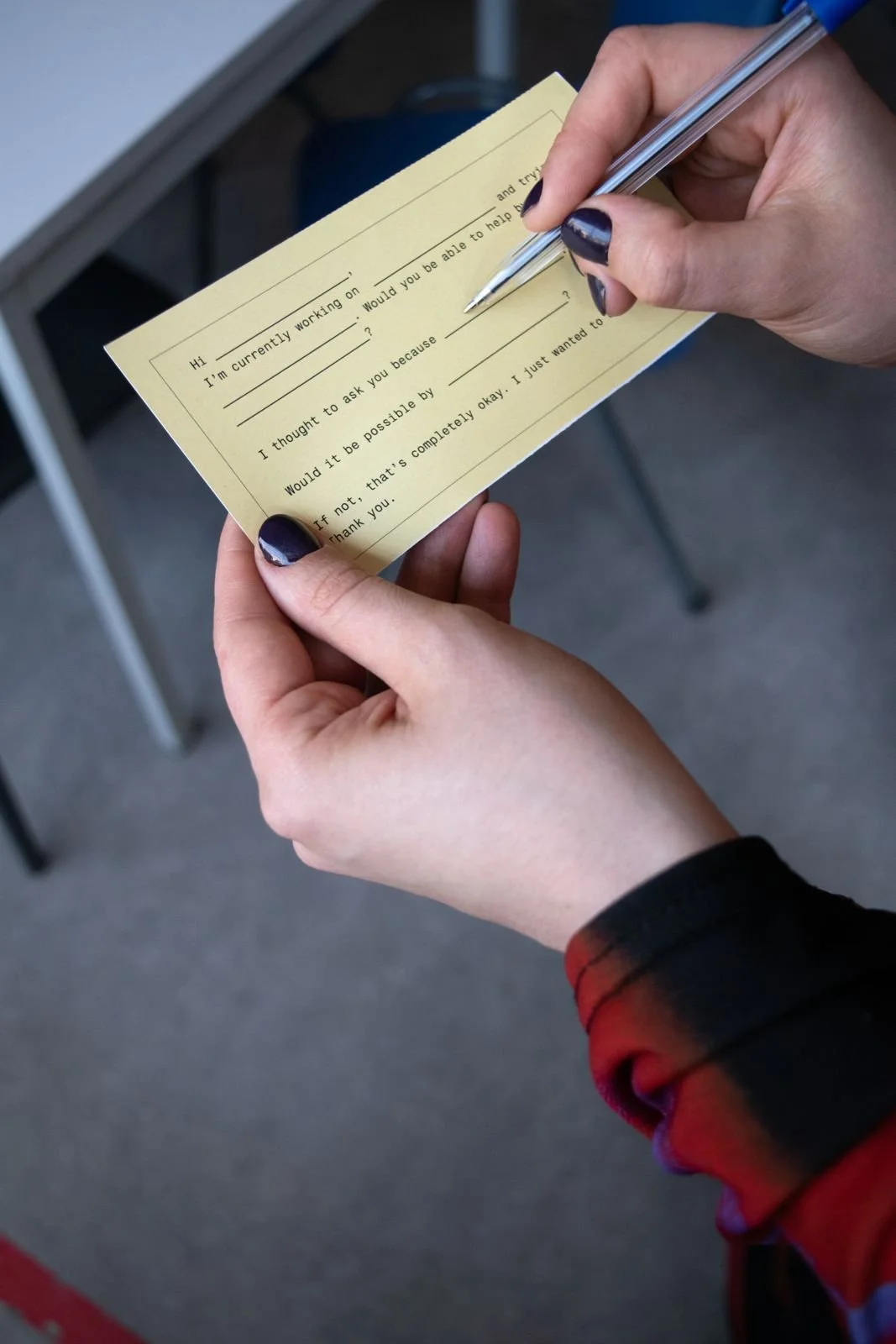
3. Structuring the ask
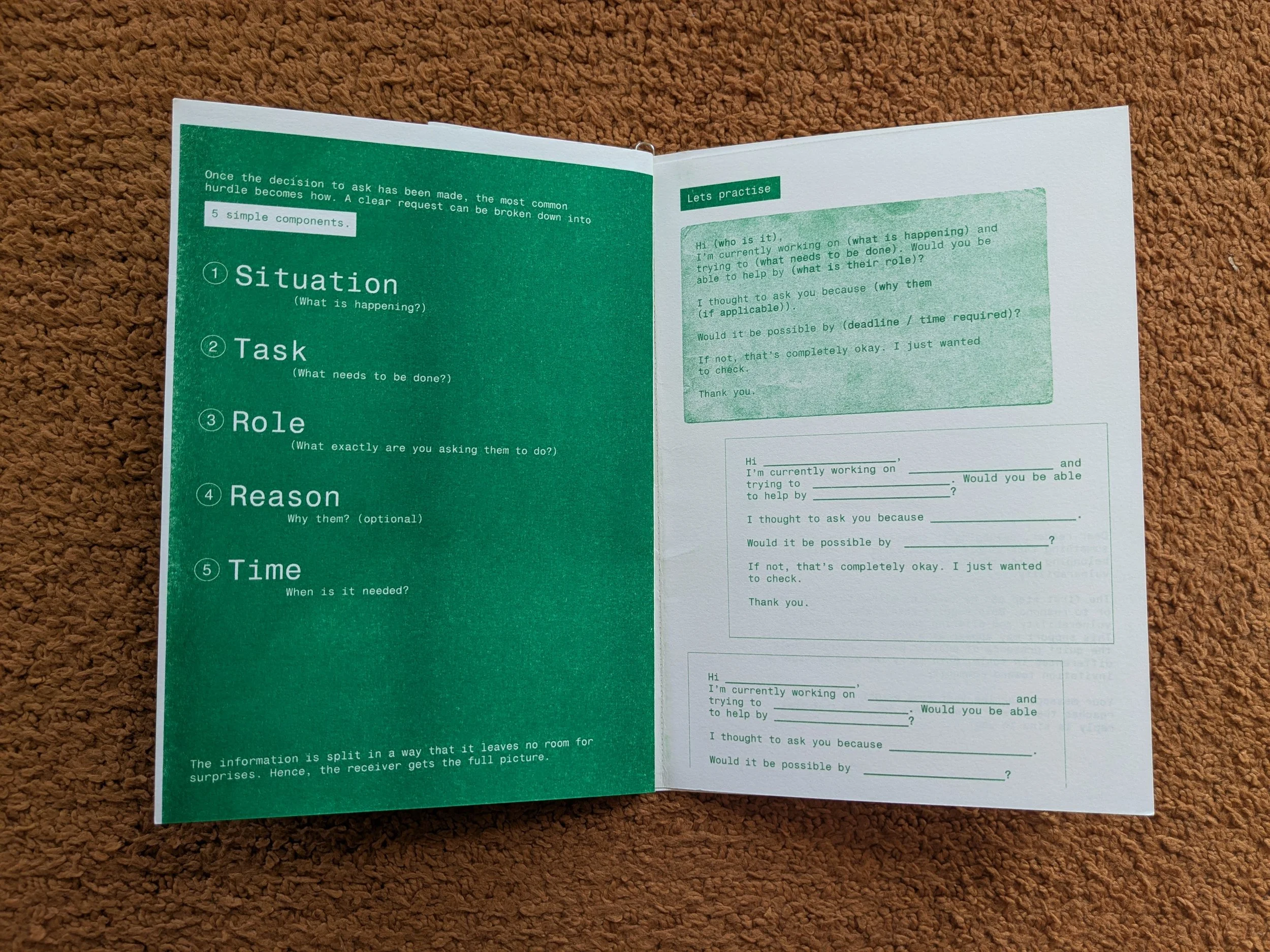
The final step is the act of asking itself. A structured message is developed to reduce ambiguity and ease both sides of the interaction, clarity for the receiver, while reducing anxiety for the sender. The framework is adapted from the SMART method, commonly used in goal-setting, and reworked into a more personal and conversational format.
Clear and specific requests can reduce ambiguity and make it easier for the other person to respond, while also lowering the perceived burden of helping.
The aside
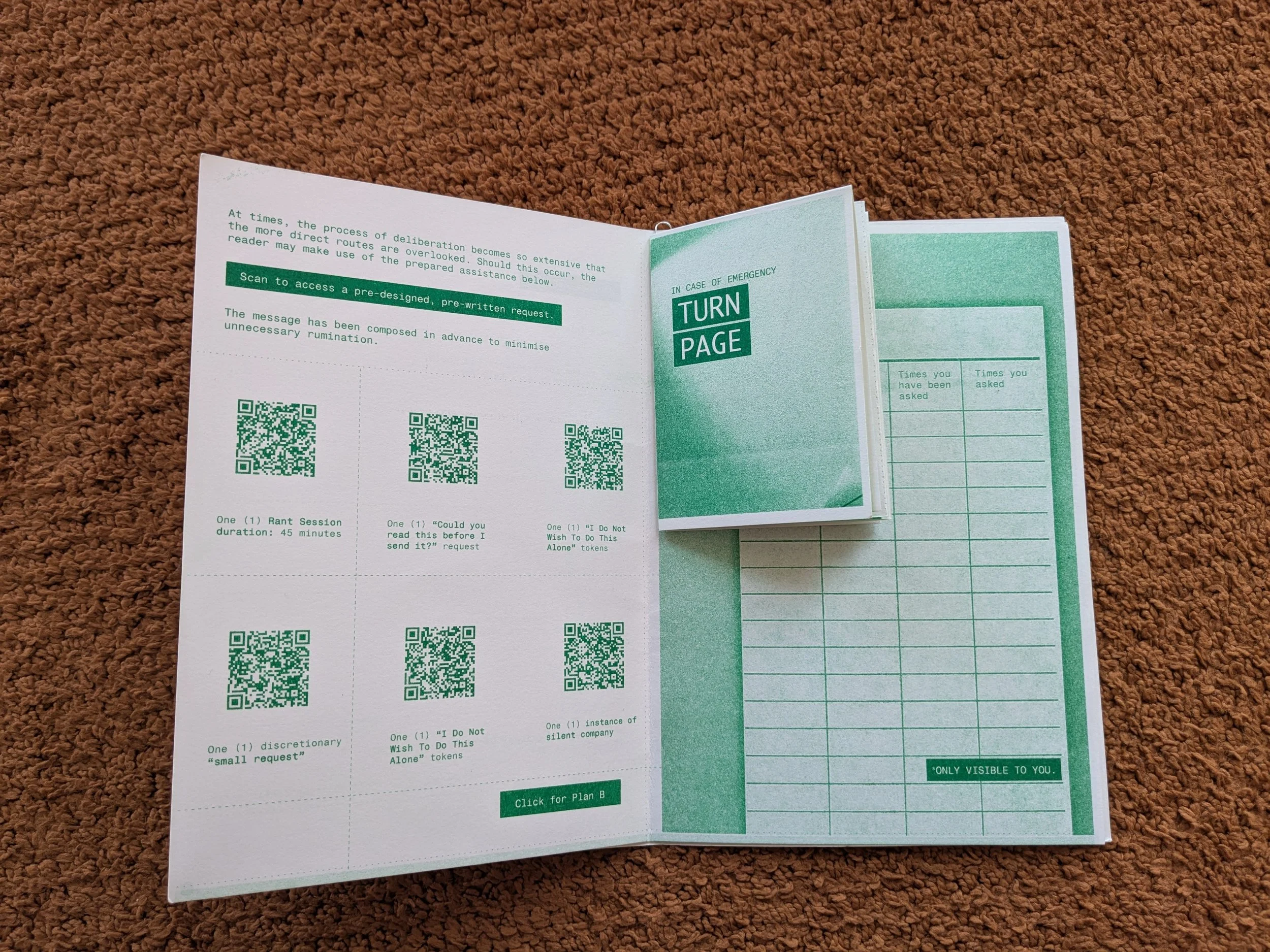
A "Plan B" insert offers indirect ways of asking, through gestures such as recipes, small gifts, and pre-written vouchers. These function as softer entry points, reframing the act of asking as a shared exchange. The methods written here was important to me as personally these are what I use to make friends or use it as an excuse to spend time with people. While this is a good way to abstain guilt, the rest of the book tries to convince you its not a requirement just an addition. Hence it being an aside and not part of the main zine.
2. Visualizing the need
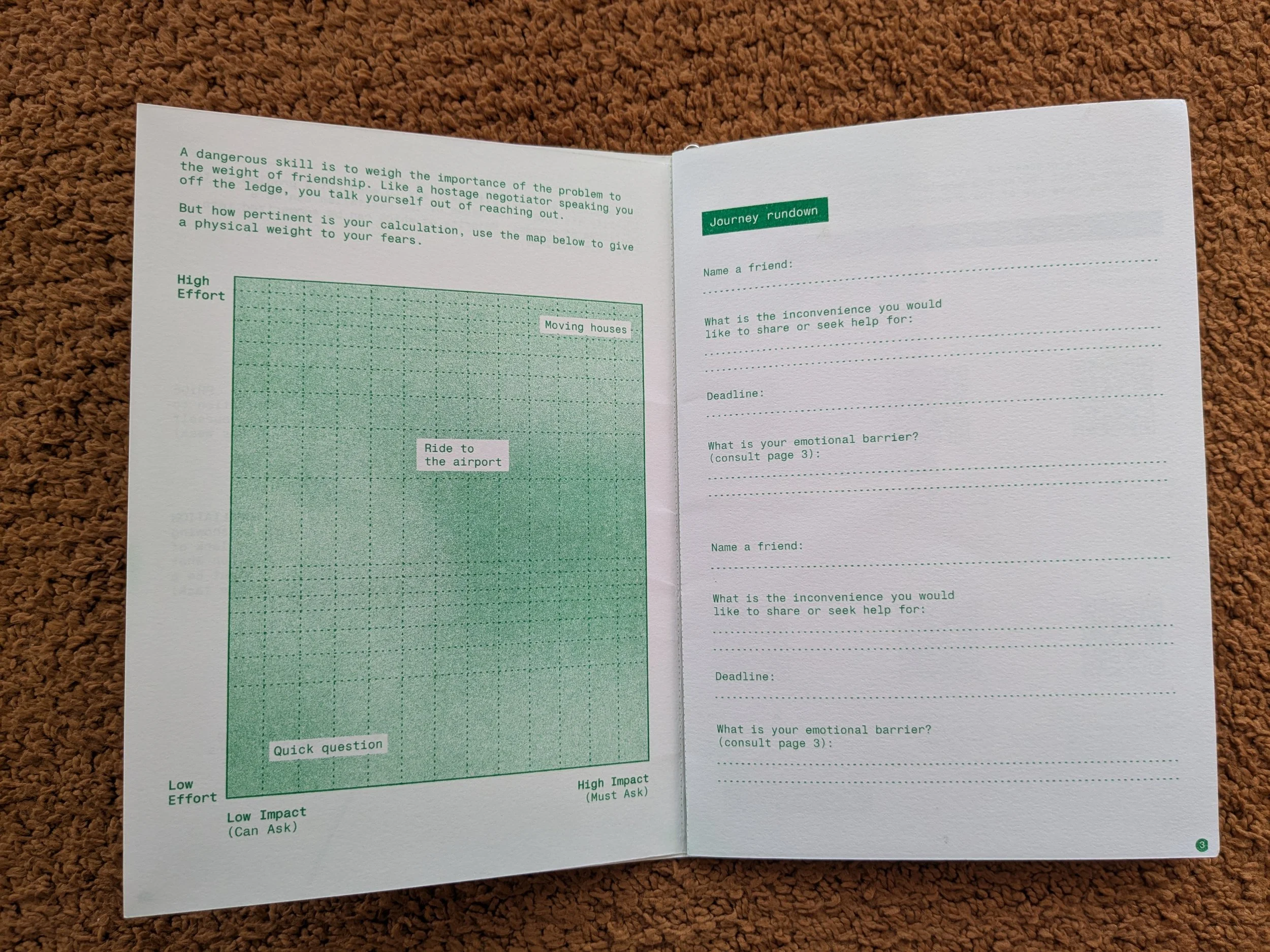
To externalize the decision-making process, the need to ask is visualized through a simple mapping system. The map positions a situation along two axes: urgency (can-must ask) and perceived effort. This allows users to either recognize the necessity of asking, or to alleviate the pressure associated with it.
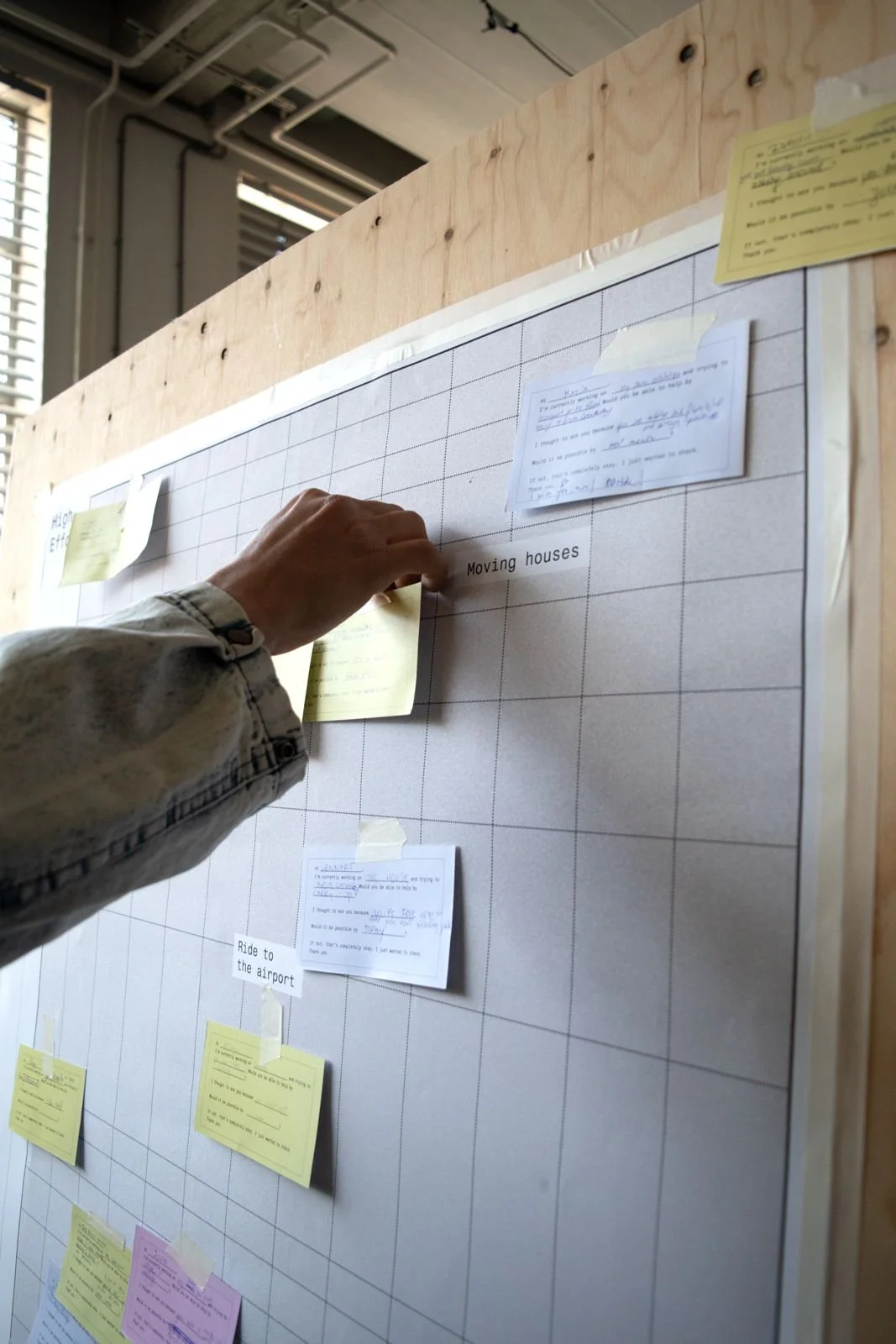
The step by step breakdown gave a clear structure for people to follow. Breaking the act into components reduced ambiguity and made the task feel more approachable. The zine format supported this well, functioning both as a guide and a workbook. Its simplicity and reproducibility allow it to be used independently, without facilitation.